ติดต่อเรา
Why Did Technology Hiring Peak in Q3?


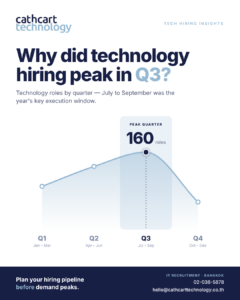
Looking at our hiring data, one trend stands out: Q3 was the busiest quarter of the year, with 160 technology roles, compared with 136 in Q1, 150 in Q2 and 125 in Q4.
What might be driving this?
One possible explanation is timing around business and technology investment cycles. By the middle of the year, many organisations have moved beyond annual planning and into execution. Technology transformation, system implementation, data and AI initiatives, and other strategic projects that were approved earlier in the year begin to translate into actual hiring demand.
Q3 can also become an important period for companies looking to strengthen teams before year-end delivery deadlines. If projects need to show progress within the same financial year, July to September provides a practical hiring window before recruitment typically becomes more challenging toward the end of the year.
There may also be a replacement and workforce-planning effect. Following bonus cycles and mid-year career moves, companies may need to replace employees while simultaneously adding headcount for new initiatives.
Interestingly, the data shows demand dropping sharply after the Q3 peak. October remained strong, but activity declined in November and in December.
For employers, the takeaway is useful: Q3 may not simply be a busy quarter — it could be a key execution window for technology hiring.
Understanding when demand tends to accelerate can help businesses plan hiring pipelines earlier and compete more effectively for talent.
Cathcart Technology is the trusted partner for IT Recruitment in Bangkok, Thailand — connecting businesses with specialist technology talent across software engineering, data, infrastructure and cyber security.
Contact our IT recruitment team:
📞 02-038-5878
✉️hello@cathcarttechnology.co.th

Office Manager
Chanatinad Chotiksatis
Thailand

Chanatinad's Opinion


3 โฟกัสที่ต้องเข้าใจก่อนเริ่มใช้ Data และ AI ในองค์กร

5 AI Trends for 2022 and beyond (Research from IBM)